June 07, 2026
When Your Tools Get Closer to the Metal
This week’s bookmarks had a useful split personality. On one side: frontier AI companies trying to squeeze more performance out of machines, teams, and geographic talent markets.
This week’s bookmarks had a useful split personality. On one side: frontier AI companies trying to squeeze more performance out of machines, teams, and geographic talent markets. On the other: individual developers reverse-engineering the devices and subscriptions already sitting on their desks.
The shared theme is control. Control over compute. Control over workflow. Control over your own health data. Control over whether the software stack is a product you use, or a system you can actually inspect and bend.
The Return of Bare Metal Ambition
Elon Musk’s note that SpaceX is “almost finished writing V1.0 of an in-house AI training stack in C” for “220k GB300s with 800G NICs” is easy to read as just another maximalist performance claim. The interesting part is not the language choice by itself. It is the direction of travel: when AI training runs become large enough, the abstractions that made the field productive can start to look expensive.
The claim is that SpaceX’s stack exact-maps to the hardware, uses heavy pipeline parallelism, and may be more than an order of magnitude faster than JAX for large training runs. That is unverified from the outside, and it is worth treating the number cautiously. But the motivation is plausible. At cluster scale, performance is not just “how fast is the GPU?” It is scheduling, communication, memory movement, network topology, and how much overhead you pay to coordinate thousands of chips as if they were one machine.
This is also why the author reply matters: Musk framed the post as a recruiting signal for people who like “getting incredible performance out of hardware.” The message is not only “we wrote C.” It is “the next AI infrastructure frontier still has room for people who understand machines below the framework layer.”
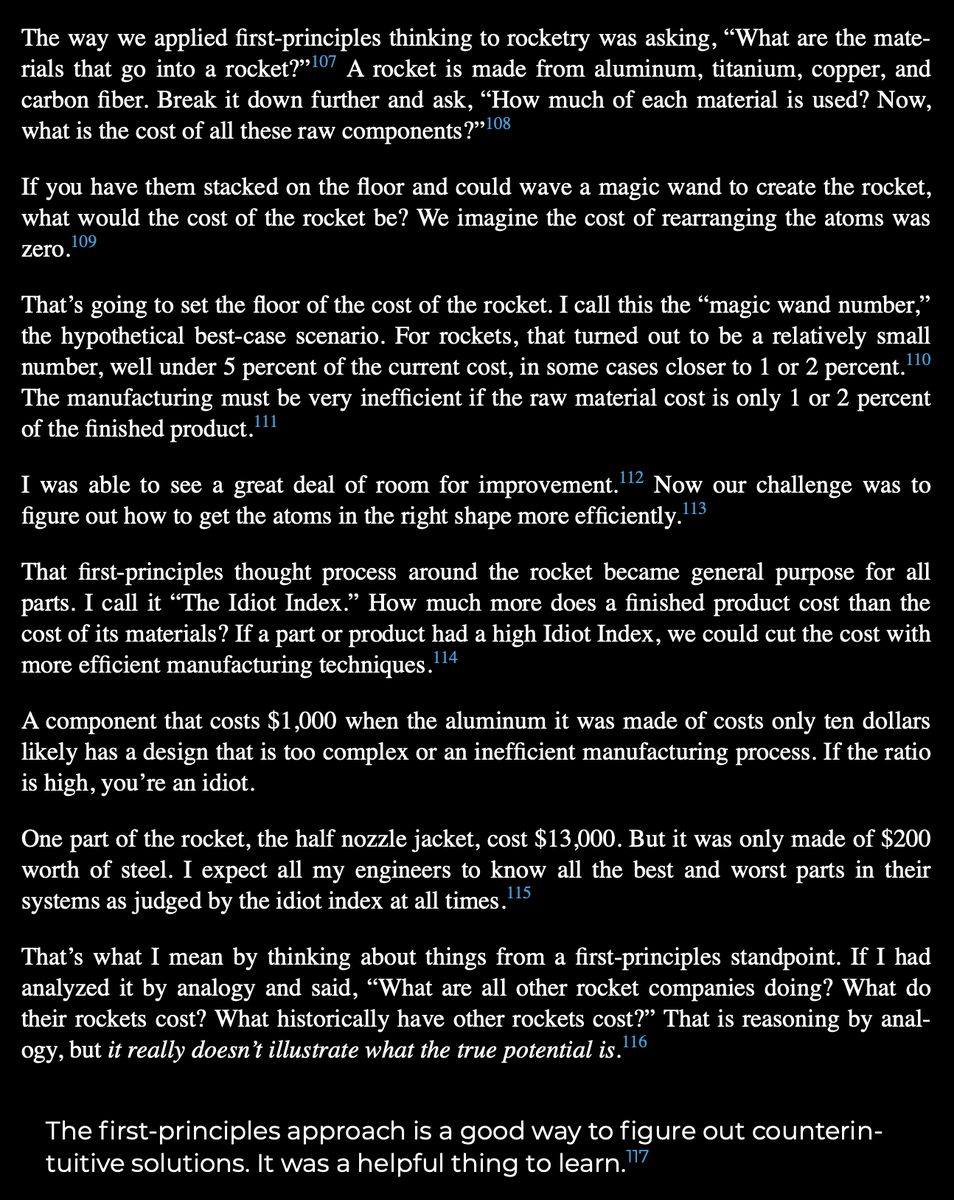
That sits neatly beside the quoted “Magic Wand Number” and “Idiot Index” tweet. The idea, popularized in Musk-world process lore, is to compare what something should cost in physics or raw materials against what it actually costs in the current system. The precise framework can become a bit slogan-like, but it points at a useful engineering reflex: when the gap is enormous, ask whether the abstraction, process, supplier chain, or organization has become the product’s hidden tax.
In AI infrastructure, the “Idiot Index” question becomes: how much of this training run is irreducible physics, and how much is software stack drag?
London Wants the World Model Jobs
Runway’s announcement that London is becoming its European HQ is more than a local office story. The company says it will invest $100 million into the UK AI ecosystem over the next 18 months, more than doubling that by 2028, and that the new hub will focus on general world models.
For the UK tech job scene, that is the useful bit. Runway is not just hiring sales and customer support near European customers. Its announcement explicitly mentions research, product, engineering, sales, and deployment, with London becoming a research hub alongside New York and San Francisco.
Runway started as one of the companies that made AI video generation feel product-shaped: creator tools, editing workflows, Gen-1/Gen-2 style models, and a strong foothold in film, advertising, and design. The newer framing is broader. “World models” are being positioned as useful for robotics, simulation, gaming, industrial environments, and scientific research. Whether that framing turns into durable products is still open, but it changes the talent signal. The interesting London roles may not only be “make video generation better”; they may be closer to simulation, multimodal systems, enterprise workflows, and applied research.
There is a wider ecosystem story too. London has a dense mix of AI research, creative industries, finance, enterprise buyers, and government attention. Runway’s move suggests that frontier AI companies still see the UK as a credible place to hire serious AI talent, especially when the product connects technical research with media and applied enterprise use cases.
For developers watching the market, this is the practical read: if you care about AI infrastructure, product engineering around generative tools, or applied simulation, London continues to be one of the few European markets where those threads overlap.
Fitness Trackers, But Make the Data Yours
The most compelling bookmark this week was the open-source WHOOP work.
Bennet’s Goose project is an iOS app that reads data directly from a WHOOP 5.0 band without requiring the official subscription. Coverage from Durov’s Code describes it as pre-alpha, built mainly with Rust and Swift, using Bluetooth data from the device and processing it locally. It is not a polished replacement for WHOOP’s app, and it currently has tight constraints: WHOOP 5.0, iOS 26, developer-oriented setup, and rough performance.
Still, this is exactly the kind of project that feels bigger than its current usability. WHOOP’s model is hardware plus recurring software. That can be a fair trade if the coaching, analytics, and product experience are excellent. But when the device is generating biometric data from your own body, locking basic access behind a subscription makes people itch. Open-source alternatives change the question from “should I subscribe?” to “what should I be allowed to do with a sensor I own?”
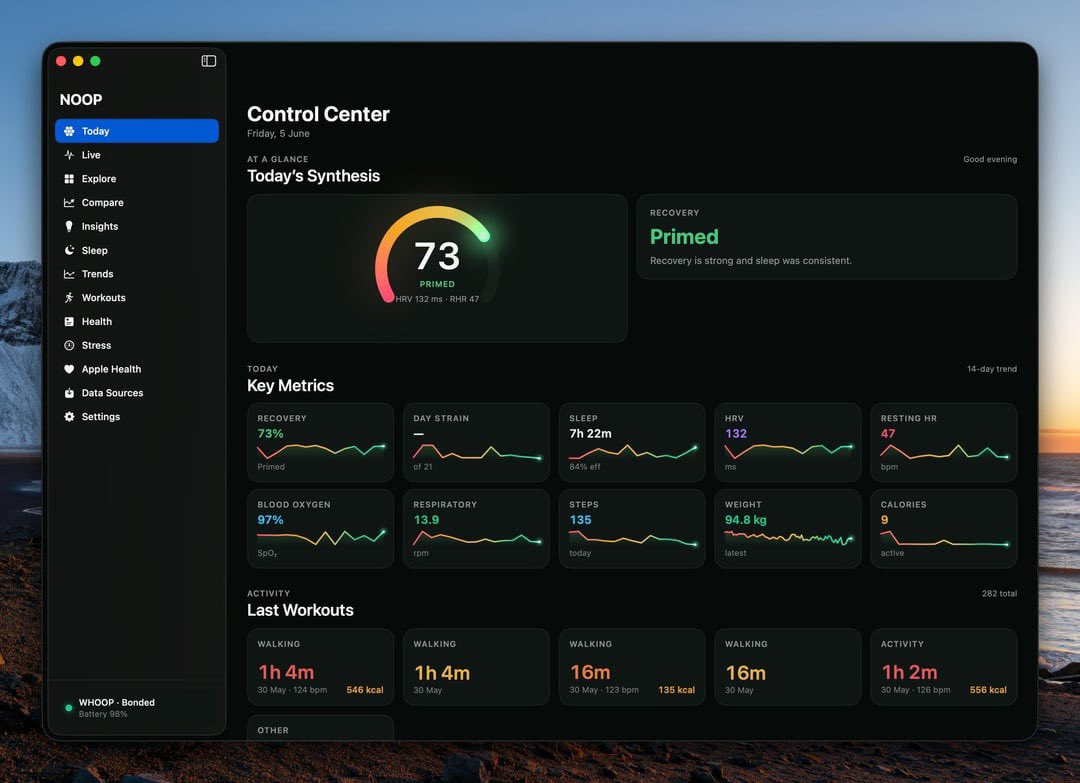
This also does not appear to be a one-off impulse. There are older and parallel attempts around WHOOP data access, including projects and discussions around WHOOP 4.0, local dashboards, and API exports. A related project, whoof, is described as a pure-browser local HRV/recovery/strain dashboard for WHOOP 4.0 without cloud. A recent Reddit post also describes a desktop app built on “my-whoop” and Goose that syncs directly from WHOOP 4 and 5, though that is community-reported and should be treated as less established than the public repos.
The deeper pattern is reverse engineering as consumer leverage. Not piracy, not cloning the full service, but forcing a clean separation between:
- the physical sensor,
- the raw data it emits,
- the proprietary analytics,
- the subscription business model.
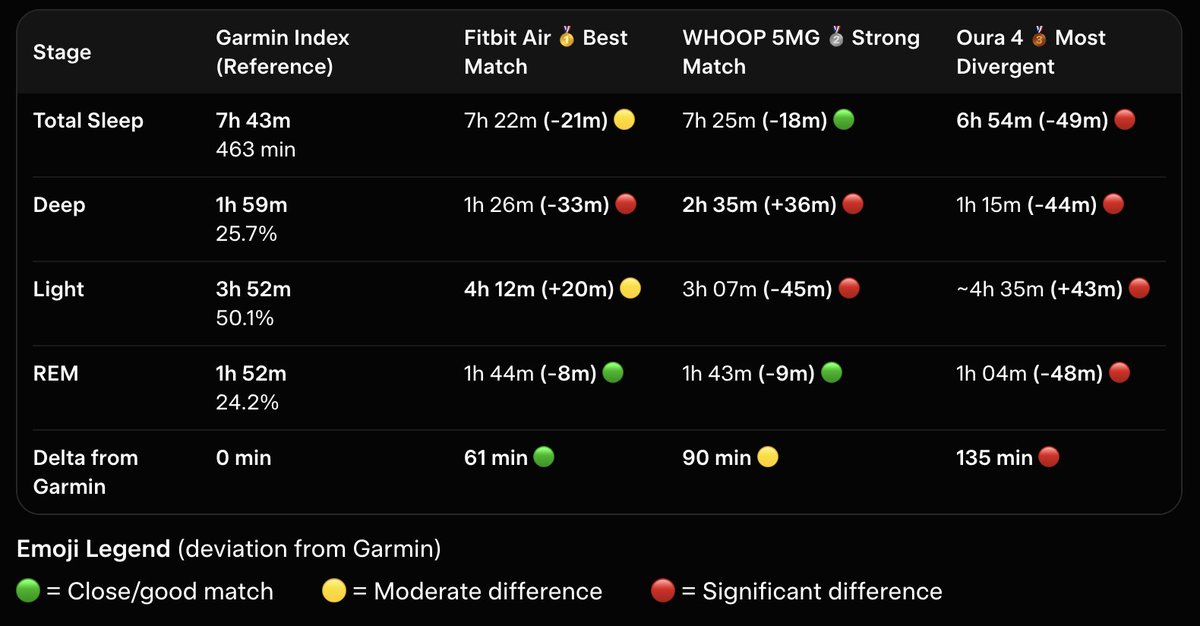
That separation is healthy. If WHOOP’s coaching is genuinely better, people will still pay for it. Morgan Linton’s long comparison points in that direction: after watching The Quantified Scientist and comparing Fitbit, WHOOP, Oura, and Garmin, he still chose WHOOP largely because the app and coaching fit his training. That is a much stronger product position than “you cannot see your data unless you pay.”
An open-source fitness tracker, as Marc Köhlbrugge argued, would have a real community behind it. The lesson from Goose is that the community may not wait for the company.
AI Coding Tools Are Becoming Workbenches
Several bookmarks circled the same developer-workflow idea: AI coding tools are becoming less like chat boxes and more like operating environments.
OpenAI Devs shared the “Build iOS Apps” plugin for Codex, showing an iOS app loop inside Codex: view and test an app, open SwiftUI previews, and hot reload edits without leaving the tool. That matters because the core bottleneck in agentic coding is not only model quality. It is the edit-run-observe loop. The more an agent can see the real app state, interact with previews, inspect failures, and apply changes in context, the less the human has to act as a clipboard between model and runtime.
The related remote iOS simulator bookmark points in the same direction. If a tool can preserve native-like simulator controls over remote access, including keypresses and edge gestures, then mobile development becomes much more accessible to cloud workspaces and coding agents. The interesting bit is not “remote desktop for iOS.” It is preserving the subtle interaction surface that mobile bugs often depend on.
The Codex skill for auditing an app before launch is another piece of this. The tweet’s framing is hypey, but the underlying category is useful: agent-readable operational checklists. A launch audit skill can encode the boring things MVPs often miss: auth boundaries, exposed service keys, webhook verification, rate limits, environment separation, database policies, logging, and paid API abuse paths. The trick is that a skill is only as good as the checks it actually performs. For serious use, I would want to see the checklist, threat model, and examples of findings, not just a screenshot.
There was also a bookmark about Anthropic internal prompting habits for staying in the loop with Claude. The prompt was embedded in an image, so the brief does not preserve it cleanly. But the high-level idea is familiar and useful: ask the model to help you understand what changed, what it inferred, what it is uncertain about, and what work remains. As coding agents become more autonomous, “status literacy” becomes part of the workflow. You do not just need the agent to code; you need it to explain its working state well enough that you can steer without rereading the entire repo.
The Subscription Layer Is Getting Weird
A few lower-priority bookmarks were about tools that route, proxy, or optimize AI subscription usage. They are worth mentioning because they reveal a real pressure point, even if individual projects may or may not be durable.
VibeProxy is a native macOS menu bar app that lets coding tools use existing Claude Code, ChatGPT, Gemini, Kimi, Qwen, Antigravity, and other subscriptions without separate API keys. It wraps CLIProxyAPIPlus and handles OAuth/token routing locally. In plain English: it tries to turn consumer or coding subscriptions into a local API-like backend for other tools.
That is useful to understand, but it sits in a gray zone users should think about carefully. The appeal is obvious: people are already paying for subscriptions and do not want a second metered API bill. The risk is that provider terms, account safety, rate limits, and reliability may not match the expectations of a normal API product. VibeProxy’s own README now emphasizes Vercel AI Gateway integration for safer Claude routing, which suggests the ecosystem is trying to move toward more sanctioned paths.
NerfGuard, from the brief, appears to be in the same broad category of AI tool cost and usage management: helping teams get more Claude Code and Codex usage for the same spend, partly by reducing waiting around for model generation. Without more primary context, I would treat it as a project to inspect rather than a proven practice to adopt. The interesting trend is not one product. It is that AI coding subscriptions have become important enough that developers now build tooling around quota, routing, parallelism, and utilization.
That is usually what happens when a tool graduates from novelty to infrastructure. People stop asking “is this impressive?” and start asking “how do I make this cheaper, observable, scriptable, and harder to misuse?”
Source Trail
- Elon Musk on SpaceX’s in-house C AI training stack: x.com/elonmusk/status/2059884150187053488
- Elon Musk quoting Eric Jorgenson on “Magic Wand Number” and “Idiot Index”: x.com/elonmusk/status/2063401522327666828
- Runway announcement on London European HQ: runwayml.com/news/runway-opens-london-hq
- Anastasis Germanidis on Runway’s UK investment: x.com/agermanidis/status/2061386245855662093
- Bennet on open-sourcing the WHOOP app: x.com/b_nnett/status/2061790494401687697
- Goose open-source WHOOP app coverage: durovscode.com/goose-open-source-whoop-app-no-subscription
- Goose GitHub repo: github.com/b-nnett/goose
- Parth Jadhav on a desktop app collecting WHOOP data: x.com/ParthJadhav8/status/2063487767078957396
- whoof project listing: trendshift.io/repositories/40769
- Marc Köhlbrugge on open-source fitness trackers: x.com/marckohlbrugge/status/2063650182252630367
- Morgan Linton on WHOOP, Fitbit, Oura, and The Quantified Scientist: x.com/morganlinton/status/2063628979366736169
- The Quantified Scientist YouTube channel: youtube.com/@TheQuantifiedScientist
- OpenAI Devs on the Build iOS Apps plugin for Codex: x.com/OpenAIDevs/status/2062599291479478275
- iOS remote access/simulator bookmark: x.com/itshanrw/status/2062831192437866519
- Codex launch-audit skill bookmark: x.com/Kappaemme1926/status/2062504650163839254
- Anthropic workflow prompt bookmark: x.com/trq212/status/2061545633560010826
- VibeProxy GitHub repo: github.com/automazeio/vibeproxy
- VibeProxy bookmark: x.com/0xSero/status/2063241834864795695
- NerfGuard bookmark: x.com/noahfradin/status/2063032657643032883
Bookmarked sources
Original context
@elonmusk · Sat Jun 06
Helpful tool for improvement. It’s just physics thinking in the limit.
Quoted tweet
@EricJorgenson: Everyone can use @elonmusk's "Magic Wand Number" and "Idiot Index" They're universal ideas, helpful in any industry. https://t.co/AhxGZtzcEZ
@thesherlocker · Tue May 26
because there's such well curated reading and viewing from @badlogicgames made a curation list - https://t.co/J0t7fqrhVh (using @theo's https://t.co/Btwag3sPTm) and yes there's a RSS feed
Quoted tweet
@badlogicgames: recommended viewing. probably one of the best explainer sources in our space. channel is full of great stuff. https://t.co/e2DNpqYiVL
@elonmusk · Thu May 28
SpaceX has almost finished writing V1.0 of an in-house AI training stack in C that exact-maps to 220k GB300s with 800G NICs, making heavy use of pipeline parallelism and getting as close to bare metal as possible. The potential speed improvement vs JAX for large training runs is over an order of magnitude.
@morganlinton · Sun Jun 07
Okay, so I just discovered an amazing You Tube channel, with someone doing a much better job at doing a deep dive into comparing wearables. The channel is called "The Quantified Scientist" or @QuantifiedRob on X, and he has lots of videos comparing different wearables. Overall in his testing, both WHOOP and Fitbit perform better than Oura for sleep and exercise tracking. And they are really neck and neck with each other when it comes to accuracy. WHOOP does do a slightly better job at tracking deep and rem sleep though. That being said, both him and I are wired the same way, we both do a lot of exercise, so the app, and fitness/recovery coaching angle is a key piece in the puzzle. And I have to say, I just can't stand the Google Health app, it feels like a beta, just really buggy. Every day I'm dealing with more random issues with the app, and the fact that it can't track as many zones as WHOOP makes it less ideal for me when I'm training for races. The AI coach also is kinda all over the place vs. WHOOP which has a fitness coach that is so dialed in and good and helping me train. Also, I learned from The Quantified Scientist that Garmin actually has some of the least-accurate sleep tracking devices, so me picking the Garmin Index as a baseline to compare to was silly. So yeah, I'll be returning that. I don't need to spend the next month testing and comparing devices, The Quantified Scientist already does this, and at a much greater depth than I ever would. I also now can make a clear decision because I have the data from him, and my own data and experience using the Fitbit Air and WHOOP together for about two weeks now. The decision is - I'm returning the Fitbit Air, if they'll let me, and keeping my WHOOP. The reality is, they both have similar accuracy, but the Google Health app is just so crude and clunky, and it definitely not worth $99/year for their AI coach, WHOOP's is better. That being said, and like The Quantified Scientist says in his review, you really can't go wrong with either device, and the Fitbit Air is certainly plenty accurate, and both are more accurate than Oura. If you can get over the funky, buggy app, and you don't do zone training and use some of the other more advanced fitness/training features in WHOOP, then the Fitbit Air is definitely a totally logical choice. But yeah, I'm sticking with WHOOP. If you want to see The Quantified Scientist's full comparison of the two, You Tube video below. And like me, he also decided to stick with the WHOOP after comparing the two. https://t.co/XcKwI9wPOm
Quoted tweet
@morganlinton: I got a Fitbit Air and wanted to compare it to my WHOOP and Oura Ring. When I first started posting about this on X, I got some good feedback, a number of people commented that comparing these three was kinda silly if I didn't have a higher-quality reference device to compare https://t.co/PrpBSzQVHg
@marckohlbrugge · Sun Jun 07
this is why I believe in an open source fitness tracker right now, with WHOOP, it's a bit of a hack. but whichever company leans into this will have a whole community behind it
Quoted tweet
@ParthJadhav8: There’s now also a desktop app which collects all the data from Whoop without subscription. https://t.co/4ANpa580Jp
Private feedback
Curation notes
Visible only on localhost. These notes and bookmark ratings are saved locally and included in the next writing prompt.